
Understanding "Information Accessibility" Through 8 Case Studies
2026/04/28
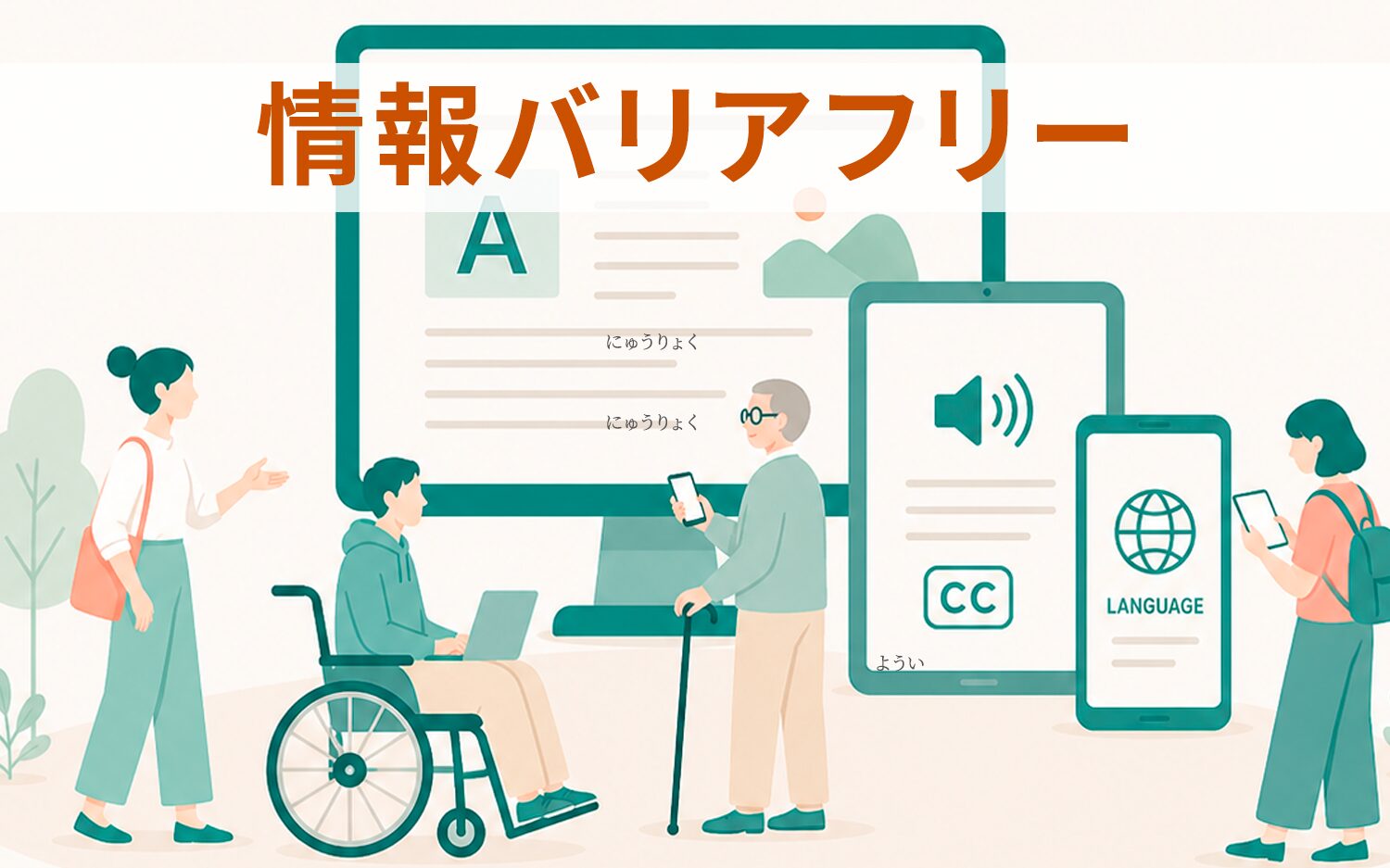
Accessible InformationThat is to say,An environment where everyone, regardless of disability, age, or language, has equal access to the information they needis to organize them.
When we hear the term “barrier-free,” we tend to think of eliminating steps in buildings or making facilities wheelchair-accessible; however, when it comes to accessing information, there are many people who find it difficult to do so for various reasons, such as visual, hearing, or language impairments. SuchEfforts to Remove "Information Barriers"However, it is accessible to everyone.
In Japan, against the backdrop of an aging population, a growing number of foreign residents, and the accelerating pace of digitalization, addressing information accessibility has come to be widely recognized as a social issue, and companies and local governments are implementing various initiatives across all media platforms.
In April 2024, amendments to the Act on the Elimination of Discrimination against Persons with Disabilities made it mandatory for private-sector businesses to provide reasonable accommodations. Delays in complying with these requirements will result in...Beyond legal risks, this could lead to a decline in the company’s image through social media and word of mouthalso available.
Given these considerations, addressing information accessibility is no longer just a matter for a select few companies and organizations,One of the attitudes expected of modern companies and organizationsAs such, it has become an unavoidable topic.
In this article, we will provide a comprehensive overview of information accessibility, covering everything from specific implementation examples to the underlying rationale and benefits, as well as practical methods for implementing these practices on websites.
Table of Contents
- 1 Eight Examples of Initiatives for "Information Accessibility" in Companies and Local Governments
- 1.1 Television broadcast
- 1.2 Printed materials and documents
- 1.3 Web and Digital
- 1.3.1 Case Study 5: Miyagi Prefecture—Continuous Improvement of Web Accessibility Following the Earthquake
- 1.3.2 Case Study 6: Sumitomo Mitsui Banking Corporation: Leading the Way in Web Accessibility Among Major Banks
- 1.3.3 Case Study 7: Toshiba Tec: A Multifunction Printer That Can Be Operated Without Relying on Vision
- 1.4 In-person service
- 2 The Background Behind the Current Demand for "Information Accessibility"
- 3 Four Benefits of Companies Implementing "Information Accessibility"
- 4 "Accessible Information" on Websites
- 5 "UniWeb": A low-cost, easy-to-use solution for making your website accessible
Eight Examples of Initiatives for "Information Accessibility" in Companies and Local Governments
First of all,Television broadcasts, printed materials, the web, and in-person customer serviceWe will introduce examples of initiatives currently underway to ensure barrier-free access to information across these four media.
Television broadcast
Television is a medium of information used on a daily basis even by older adults who are not familiar with smartphones or computers.Initiatives to leverage the unique characteristics of television to reach a wider audienceis underway in various locations.
Case Study 1: Raneko Town, Hokkaido: Delivering Government and Disaster Prevention Information via TV Screens
The town of Rankoshi, Hokkaido, is collaborating with HTB (Hokkaido Television Broadcasting) and Japan Cablecast to provide services via television screensA system for distributing administrative and disaster prevention information to residentsWe have implemented this.
It is positioned as a means of supplementing disaster prevention public address systems and IP notification terminals to ensure that information reaches households without smartphones and the elderly.
◆ Sample Screen for Raneko Town’s “Local Government Information Distribution Service via Television”
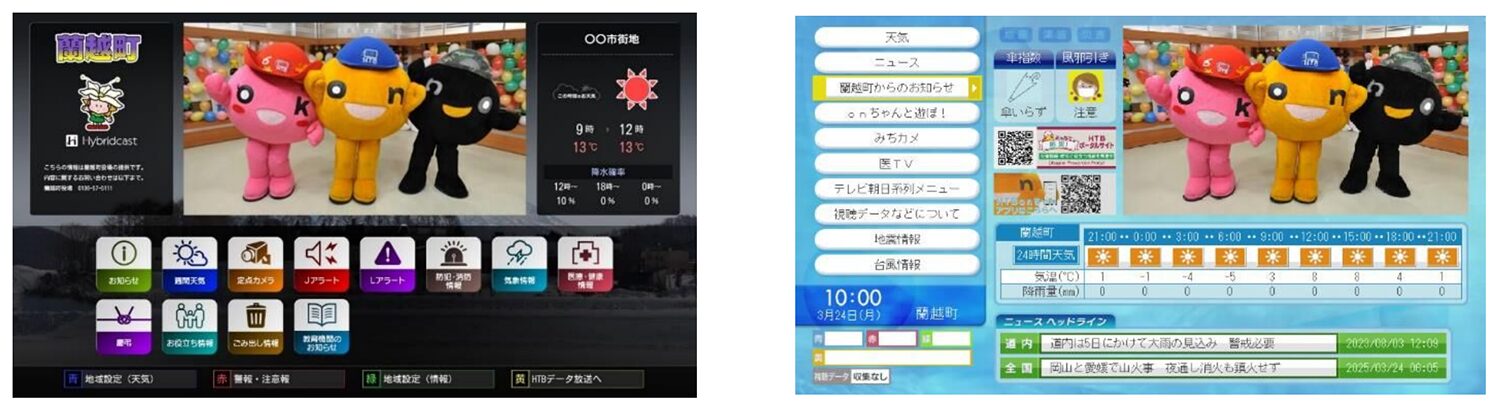
Source: Hokkaido Television Broadcasting Co., Ltd. “Hokkaido Television Broadcasting and Japan Cablecast will begin operating a "TV-based municipal information distribution service" in Raneko Town, Hokkaido, starting in April 2025."(March 26, 2025)"
Case Study 2: Shizuoka City: Delivering Municipal Information via Data Broadcasting (d-Button)
Shizuoka City is collaborating with Shizuoka Asahi Television to broadcast on televisionData BroadcastingWe operate the "SATV Local Government Public Relations Information" service, which utilizes this platform.
By delivering municipal news, tourism information, and event updates via television, we are creating an environment where information is easily accessible even to those who do not use computers or smartphones.
Source: Shizuoka City Official Website "Shizuoka City SATV Local Government Public Relations Information」
Printed materials and documents
Even when providing information in print, it is important to take into account the recipient’s circumstances.Initiatives to ensure information accessibility for people with visual impairments or those who have difficulty reading textis spreading.
Case Study 3: Machida City: The "Information Accessibility Handbook" Available in Multiple Formats
The City of Machida, Tokyo, has created the "Information Accessibility Handbook" to support people who have difficulty accessing information.
We will release a revised edition in April 2025, and in addition to the standard PDF version,Braille edition, DAISY edition (audiobook), and text data editionWe also offer these three formats. Additionally,You can also view it on the "Machiiro" app for smartphones and tabletsIt is.
◆Handbook on Accessible Information
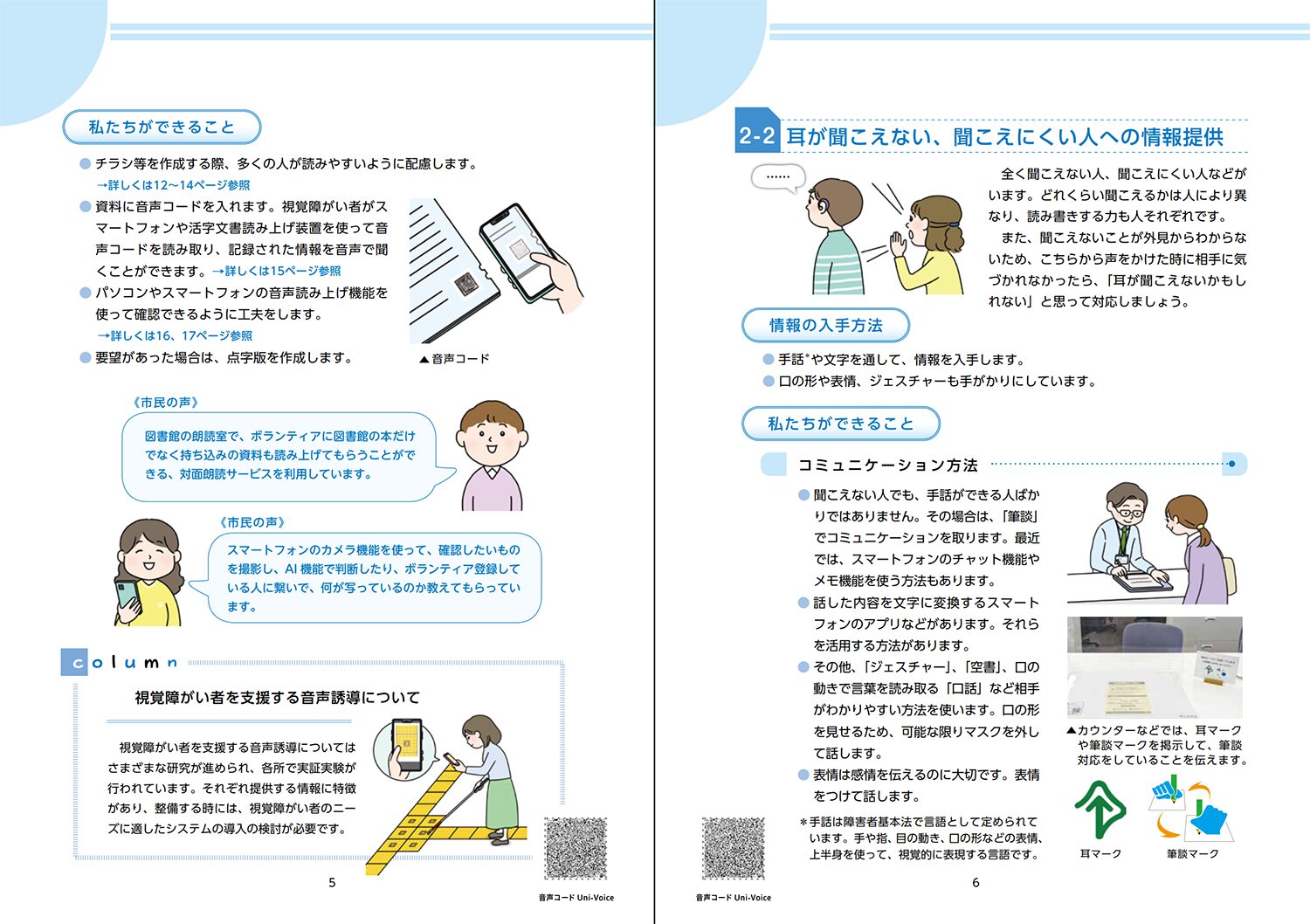
This handbook has been designed to ensure that people with visual impairments can access its content in a format that suits their needs.
Source: Machida City Website "Information Accessibility: Toward Universal Design of Information for Everyone」
Case Study 4: Imura Co., Ltd.: Envelopes with Braille Printing
Imura Co., Ltd., Japan’s leading manufacturer and seller of envelopes,Braille embossing using embossing technology, and audio code (SP code) embossing linked to a text-to-speech deviceWe offer a service that applies [this] to envelopes and other items.
Braille formatting allows the recipient to grasp the general content through touch, while audio coding enables the information in the printed material to be accessed audibly using a dedicated screen reader.
◆Barrier-free envelopes
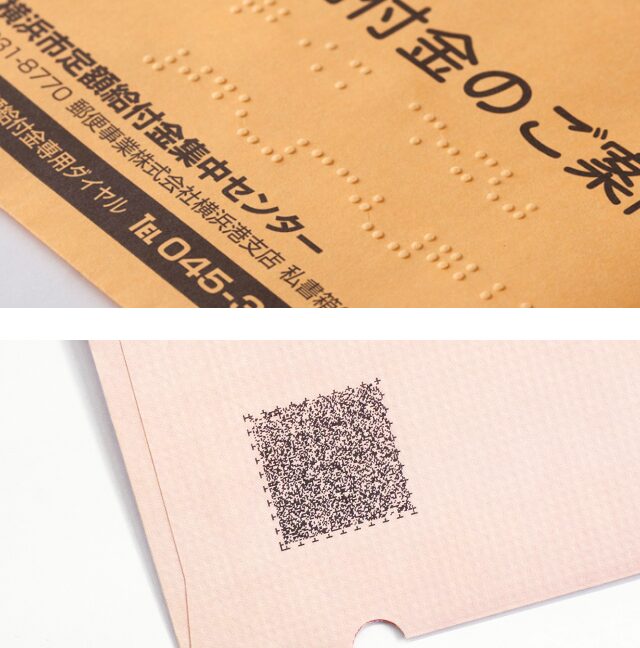
Designed to be accessible from the very first point of contact—the "entry point"—this product serves as a means of providing information to people with visual impairments.
Source: Imura's service website [Rmitp]"Social Contribution and Accessibility」
Web and Digital
In today's world, websites play a central role in the information infrastructure. Government agencies and private companies,A web environment accessible to everyone, regardless of disability or ageWe are working to improve this.
Case Study 5: Miyagi Prefecture—Continuous Improvement of Web Accessibility Following the Earthquake
In the wake of the Great East Japan Earthquake, Miyagi Prefecture recognized the importance of disseminating a wide range of information via its website, and in 2012,Focusing on accessibilityWe have completed the website redesign.
The following year, in 2013, we established a web accessibility policy, andAiming for compliance with Grade AA of Japanese Industrial Standard JIS X 8341-3:2016We are continuing to take ongoing measures to address this.
Source: Miyagi Prefecture Official Website "Miyagi Prefecture Official Website: Web Accessibility Policy」
Case Study 6: Sumitomo Mitsui Banking Corporation: Leading the Way in Web Accessibility Among Major Banks
In 2005, Sumitomo Mitsui Banking Corporation became the first major bank to"Web Accessibility Guidelines"We have formulated and published the plan.Ensuring alternative text is provided and heading structures are properly organized so that people with visual impairments can access information using screen readersIt supports these and other features.
We have also published test results based on WCAG 2.1, the current international standard, on our official website.
Source: Sumitomo Mitsui Banking Corporation "SMBC Accessibility」
Case Study 7: Toshiba Tec: A Multifunction Printer That Can Be Operated Without Relying on Vision
Toshiba Tec Corporation,"e-BRIDGE Plus for Voice Guidance," a feature that allows users to perform copy operations without using their eyesWe have developed this feature and have incorporated it into certain models of our multifunction printers.
Connecting a standard speaker enables voice guidance, allowing you to complete the entire process—from copying settings to starting the task—with just taps, double-taps, and swipes.
◆「e-BRIDGE Plus for Voice Guidance」の操作画面
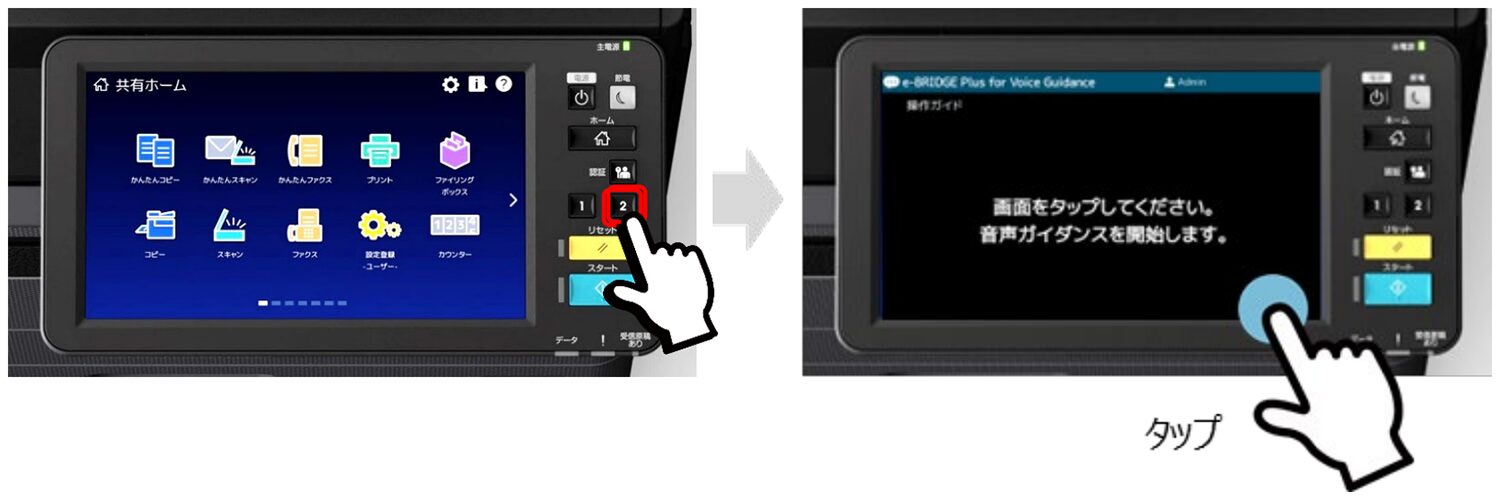
It won the 2022 Good Design Award, andIt has also been selected for the Ministry of Internal Affairs and Communications’ “Best Practices in Information Accessibility 2023”。
Source: Toshiba Tec Corporation "e-BRIDGE Plus for Voice Guidance」
In-person service
Even when providing information in person,Initiatives to address mobility challenges and physical limitationsis emerging.
Case Study 8: Yuki City Hall: Consultation Services via Online Face-to-Face Counter
With the aim of promoting digital transformation (DX) in local government, Yuki City, Ibaraki Prefecture, has introducedOnline Customer Service Desk Utilizing a Video Conferencing SystemWe have installed [...].
This system allows you to receive guidance via video call from a branch office—without having to visit the main building—on how to fill out application forms and complete procedures related to insurance, welfare, child-rearing, and other matters that are difficult to explain over the phone.
◆A scene of people using the online service desk
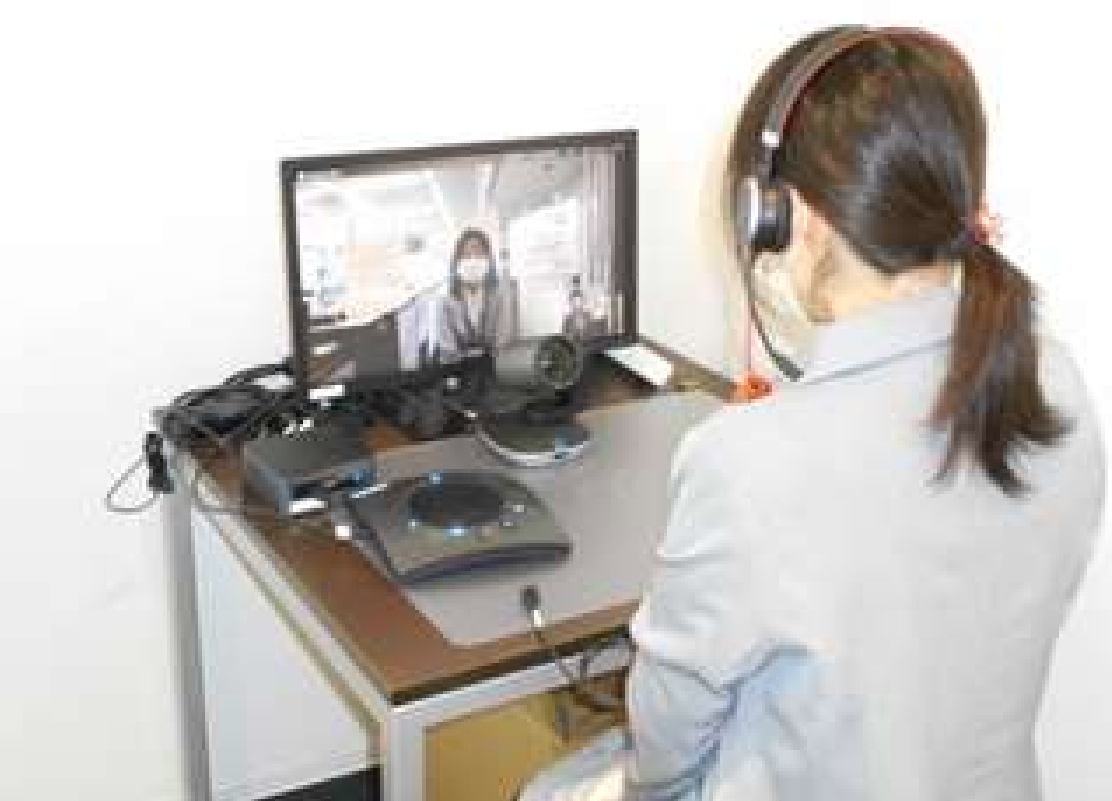
The primary goal is to improve operational efficiency, butElderly people and individuals with disabilities who have difficulty getting around can receive the necessary information and explanations at the branch officeIn terms of creating an accessible environment, this also contributes to the realization of barrier-free information access.
Source: Tsukuba City Public Relations "May 15, 2021 Announcements」、RILG: Research Institute for Local Government (General Incorporated Foundation)
The Background Behind the Current Demand for "Information Accessibility"
Here, we will explain the background behind why information accessibility has begun to gain attention as a social issue. In Japan today,Changes such as the growing elderly population, the presence of people with disabilities, and the increasing number of foreign nationalsAs a result, the diversity of those receiving information is rapidly expanding.
According to population estimates by the Ministry of Internal Affairs and Communications,As of September 2024, the population aged 65 and older stood at 36.25 million, with an aging rate of 29.3%...setting a new record high. According to estimates by the National Institute of Population and Social Security Research,It is projected to reach 34.8% by 2040.
◆Trends in the Population Aged 65 and Over and Its Proportion (1950–2045)
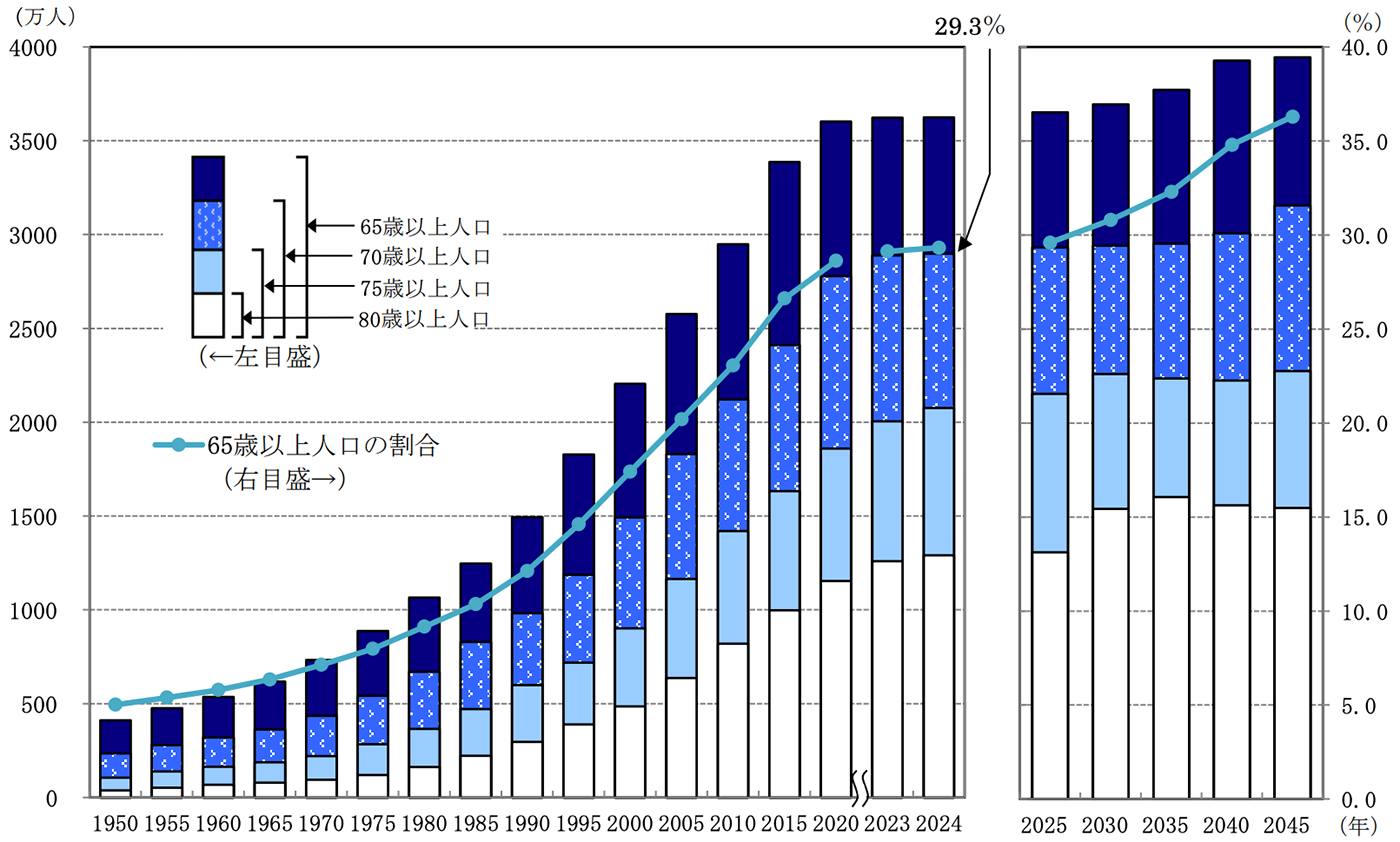
Source: Ministry of Internal Affairs and Communications "Statistical Topics No. 142: Japan’s Elderly Population as Seen Through Statistics Figure 1」
Age-related declines in vision and hearing, as well as changes in cognitive function, directly affect how we process information. Situations such as difficulty reading text, trouble hearing speech, or challenges with complex operations all constitute information barriers.
In Japan, where the population is aging, ensuring barrier-free access to information is no longer a matter of accommodating just a small number of people, but has become an issue that concerns society as a whole。
In addition, according to the Cabinet Office’s “2023 White Paper on Persons with Disabilities,”The number of people with disabilities in Japan is approximately 4.36 million with physical disabilities, approximately 1.094 million with intellectual disabilities, and approximately 6.148 million with mental disabilities.It is said.
Source: Cabinet Office "2023 White Paper on Persons with Disabilities」
Without information tailored to their visual, auditory, or cognitive needs, these individuals may not be able to fully access the information they require.Temporary changes in condition due to accidents or illnessWhen you consider these factors as well, information barriers are an issue that affects everyone.
While the shift toward online administrative procedures and the dissemination of information via the web is advancing rapidly, if website accessibility is inadequate, there is an increased risk that older adults and people with disabilities will be left behind.
For everyone to benefit equally from digitalization, it is essential that the means of delivering information be accessible to all.
Furthermore, efforts to establish relevant laws are another factor behind this.Following amendments to the Act on the Elimination of Discrimination against Persons with Disabilities, private-sector businesses have been required to provide "reasonable accommodations" since April 2024.. Providing reasonable accommodations for people with disabilities when sharing information is clearly established as a legal obligation for companies and organizations.
Given this context, efforts to ensure barrier-free access to information are,This is both a social responsibility and one of the actions expected of us as a businessIt is now.
Four Benefits of Companies Implementing "Information Accessibility"
Here, we outline the specific benefits that initiatives to promote information accessibility bring to organizations and companies.
Benefit 1: Information reaches a wider audience
By ensuring barrier-free access to information, we can reach groups that have previously had difficulty accessing information, such as older adults, people with disabilities, and those with foreign roots,This will expand our reach to a wider audience.Japan’s aging population is growing year by year, and there are millions of people with disabilities living in the country.
Creating an environment where such people can access information is,Expanding the pool of potential users and customersIt also links directly to...
Benefit 2: Improved website quality and positive impact on SEO
Efforts to ensure information accessibility on a website also contribute to improving the overall quality of the site.
Measures such as setting alternative text (alt text) for images, organizing heading structures, and establishing a logical HTML structure,While improving web accessibility, this also makes it easier for search engines to accurately interpret the contentIt is also effective.
While making your site accessible doesn't directly improve your Google search rankings,By improving the site’s usability and reducing bounce rates, this indirectly contributes to a higher search engine ranking.。
Benefit 3: Enhanced credibility for companies and organizations
Creating an environment where everyone can access information also demonstrates our organization’s commitment to accessibility to the outside world. By incorporating considerations for older adults and people with disabilities into our websites and documents, we demonstrate our commitment to social responsibility,Enhancing trust among users and customersThis leads to.
Especially in recent years,Initiatives related to ESG (Environmental, Social, and Governance) and diversity and inclusion are gaining attention as key indicators for corporate evaluation. Efforts to ensure barrier-free access to information serve as a practical manifestation of social inclusion,This also affects how we are perceived by a wide range of stakeholders, including investors, business partners, and job seekersThis is one of our initiatives.
From this perspective as well, there is a growing recognition that addressing information accessibility is not merely a cost, but rather an investment that enhances an organization’s value.
Reference article:ESG refers to management and investment criteria based on "environmental, social and corporate governance
Benefit 4: Avoiding Legal Risks
Under the April 2024 amendment to the Act on the Elimination of Discrimination against Persons with Disabilities, private-sector businesses are now also required to provide reasonable accommodations.
If measures to ensure barrier-free access to information are insufficient, there is a possibility that we may be unable to respond appropriately when people with disabilities request accommodations, andInadequate customer service also carries the risk of damaging a company’s image through social media and word of mouth.。
Legislative reforms may continue to progress in the future. It is important to take steps to prepare for this at an early stage,Establish a system that minimizes future compliance costs and allows for flexible adaptation to changes in regulationsIn that sense, it can be considered a rational decision.
"Accessible Information" on Websites
As the shift toward online administrative procedures and the dissemination of information via the web continues to expand, websites play a central role in the information infrastructure.
However, if a website is not accessible, the very gateway to information is effectively closed off to older adults and people with disabilities.
Information accessibility on websites refers to efforts to address such situations; specifically,"Web Accessibility"This leads to the idea that...
Web accessibility means thatA state in which everyone—regardless of disability, age, or usage environment—can access the information and features provided on the websiteThis refers to... While the requirements for web accessibility are wide-ranging, the following are some of the most common ones.
◆Specific Examples of Web Accessibility Implementation
・Improve readability by increasing font size and ensuring adequate color contrast
・Add subtitles to a video
・Design the site so that it can be navigated entirely using the keyboard
It is through the accumulation of such efforts that web accessibility—that is,Practicing Accessibility on Websites.
If you would like to learn more about the principles of web accessibility and the measures we have implemented,The following articlesPlease also refer to this.
Related Articles:What web accessibility measures must site managers implement?
The standards for web accessibility are based on international web accessibility standardsWCAG(Web Content Accessibility Guidelines)is based on, butIn Japan, JIS X 8341-3:2016 is referenced as a web accessibility standardIt is being done.
This standard has three levels of compliance: "A," "AA," and "AAA." The Ministry of Internal Affairs and Communications' "Guidelines for the Operation of Public Websites (2024 Edition)" stipulate that,Public institutions, such as national and local governments, are required to comply with Conformity Level "AA"。
Source: Ministry of Internal Affairs and Communications "Minna no Public Site Operation Guidelines (2024 Edition)」
While there is growing recognition of the importance of web accessibility, there are still many websites where sufficient measures have not yet been implemented.
Especially for small and medium-sized businesses and organizations,Barriers such as a lack of expertise and cost concerns often hinder the ability to address these issuesThis is the current situation. To achieve barrier-free access to information on websites, there is a need for methods that lower these barriers and make it easier to implement web accessibility measures.
"UniWeb": A low-cost, easy-to-use solution for making your website accessible
Information accessibility refers to creating an environment where everyone can access necessary information equally, regardless of disability, age, or language. Against the backdrop of an aging population and the accelerating pace of digitalization, its importance is growing across all media, including television, print materials, the web, and in-person service counters.
In particular, ensuring that information on websites is accessible to all is an urgent priority. With the April 2024 amendment to the Act on the Elimination of Discrimination against Persons with Disabilities, private-sector businesses are now also required to provide reasonable accommodations, andWebsite accessibility is an issue that companies and organizations should addresswas clearly defined as
However, when it comes to actually implementing web accessibility measures, factors such as the need to acquire specialized knowledge, development costs, and the time required for modifications often make it difficult to get started right away.
One way to address such challenges is the solution we offerWeb Accessibility Tool 'UniWeb'.
Uniweb isYou can implement it by adding just one line of code to your websiteVisitors will be able to immediately access more than 30 accessibility features—including text size adjustment, contrast adjustment, and screen reader support—on all sites.
You can start making your website accessible to everyone, even without major overhauls or specialized knowledgeThis is what sets UniWeb apart and is its greatest advantage.
In addition, whenever there are updates to web accessibility standards, UniWeb automatically adapts its features to ensure that it always complies with the latest standards.
If you're interested,The person-shaped icon displayed in the bottom right corner of this articleYou can try out UniWeb’s wide range of accessibility features for yourself, so why not give it a try?
Please note that “information accessibility,” as discussed in this article, is just one aspect of the broader accessibility movement; in addition to information barriers, accessibility also encompasses physical, systemic, and attitudinal barriers.If you’d like to gain a systematic understanding of the concept of barrier-free design, please refer to this article as well.。
Previous posts:The purpose of barrier-free is to eliminate the four types of barriers.
Popular Articles
-

Thorough illustrated explanation of 18 useful functions of AssistiveTouch
-
13 types of "easy-to-read fonts" and 3 key points on how to choose one.
-
Explanation and examples of the "7 principles" for understanding universal design
-
Thorough explanation of 13 specific examples to deepen understanding of "barrier-free".
-
Eight "screen sharing tools" for novice users to choose from.
-
Contact Us
-
Request Info
-
Free Trial
-
Partner System